How to make your Valorant clips look satisfying like Rawzu's 20 minute montage
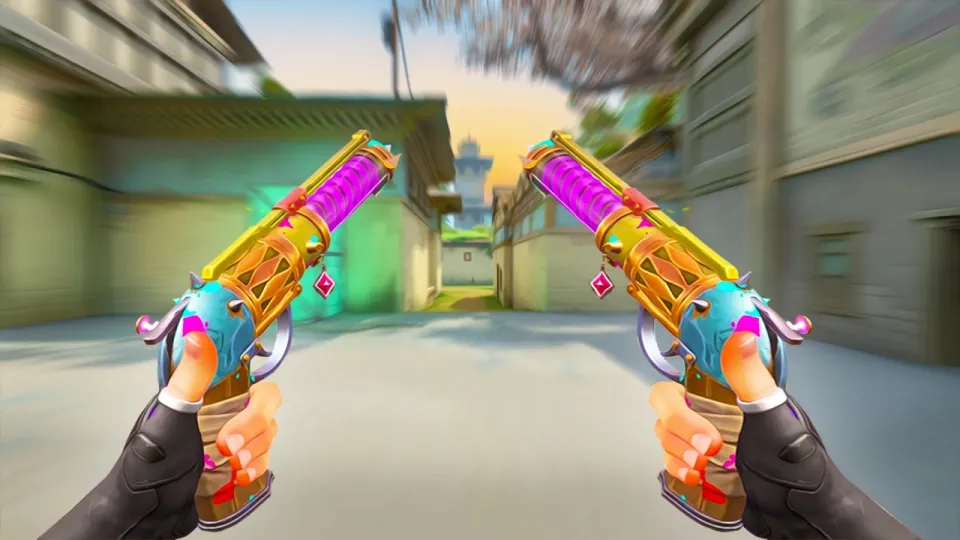
Video: 20 Minutes of Satisfying Valorant Clips
Want articles like this for your own video to promote it on YouTube and Google? Order them through the Telegram bot @sat_sit_bot. It writes articles around your video, embeds the video and publishes them on popular niche websites (no ads). Try it free: 50 articles on us.
Key takeaways
- Rawzu runs 400 DPI with 0.625 in-game sensitivity and a 1440x1080 stretched resolution.
- His crosshair code is 1-6-2-2, paired with a Lamzu Maya X mouse and a Zowie H-SR-SE 2 Blue pad.
- The 20 Minute Satisfying Valorant Clips montage is built around Phoenix, Lotus, and Icebox plays.
- Viewers repeatedly flag the commentary, the one-taps, and the movement speed as the most rewatchable parts.
- Rawzu streams daily on Kick and releases original music on Spotify.
Making Valorant clips look satisfying is mostly about repeatable fundamentals: a stretched resolution that widens enemy models, a low, stable sensitivity, a crosshair that never hides the head, and a recording setup that keeps frame pacing smooth. Rawzu's 20 Minutes of Satisfying Valorant Clips is a useful reference because it shows what those settings look like in practice across Phoenix, Lotus, and Icebox rounds, and you can watch his live runs on Kick to see the same habits unedited.
What makes a Valorant clip satisfying to watch
A satisfying clip is not just a kill; it is a kill the viewer can follow without pausing. Three things do the heavy lifting: clean crosshair placement before the shot, movement that keeps the camera readable, and audio that lets a single tap land instead of drowning in noise. In Rawzu's montage the camera rarely swings wildly between targets, which is why longer sequences stay watchable instead of turning into a blur.
The second ingredient is contrast. A clip reads better when the setup is calm and the payoff is sudden, so a quiet angle hold followed by one quick flick feels more impressive than ten seconds of constant strafing. That is also why the comment sections under these montages keep returning to specific timestamps rather than the whole run.
Settings that support satisfying Valorant gameplay
Rawzu's listed setup is a good starting template, and every value is copyable in a few minutes.
- Sensitivity: 400 DPI with 0.625 in-game sensitivity. This is a low effective sensitivity, which favors precise micro-adjustments over big arm swings.
- Resolution: 1440x1080 stretched. The wider aspect makes enemy hitboxes appear larger on screen, which many players find easier to track.
- Crosshair: 1-6-2-2. A compact, thin crosshair leaves the head visible and does not obscure long-range targets.
- Mouse: Lamzu Maya X, on a Zowie H-SR-SE 2 Blue mousepad. A large, consistent pad surface matters more than brand for flick consistency.
- Monitor: Zowie XL2566K at 360Hz. High refresh rate reduces the motion blur that makes fast plays hard to read on video.
None of these values are magic on their own. They work because they are stable: the same sensitivity, the same crosshair, and the same pad every session, so your aim is calibrated to one set of physics instead of five.
How to build a Valorant clip around Phoenix
Phoenix is an offensive duelist built to hunt enemies while crippling their ability to fire back, which makes him one of the easiest agents to film clean clips with. Blaze creates a wall that blocks vision and deals damage, so you can cross open, defended ground without being pre-aimed. Curveball blinds enemies even when they are tucked behind corners, which converts a stalemate into a free entry. Hot Hands and the Run it Back ultimate together make Phoenix durable enough to take the first fight, die, and come back to take another.
For clip purposes, that kit gives you a natural three-beat structure: blind, wall, entry. A Curveball into a Blaze wall followed by a committed push produces a readable sequence with a clear beginning, middle, and end, which is exactly what makes a short clip feel complete rather than random. If you play Phoenix as a main, record your entries in full rather than only the final kill, because the ability usage is often the more satisfying part to rewatch.
Positioning, movement, and the details viewers actually notice
The details that get called out in the comments are rarely the flashiest ones. Across the reactions to this montage, the recurring themes are movement speed, one-taps, and the commentary, not the scoreboard. That tells you what to protect in your own recordings.
- Keep your movement purposeful. Constant, directionless strafing makes a clip feel nervous; short, deliberate peeks read as confident.
- Favor one-taps and short bursts. A single clean headshot is more satisfying on replay than a long spray that happens to land.
- Leave your comms in. Supportive teammates and a running joke or two make a clip rewatchable in a way that silence never does.
- Do not cut the setup. Two seconds of a calm angle hold makes the following kill land harder.
- Watch your own footage at 3 a.m. If it does not make you want to queue, it will not make anyone else want to watch.
A related point from the audience: several viewers joke that their own lobbies feel harder because enemies actually shoot back and use game sense. That is worth remembering when you edit. The clip is a highlight, not a baseline, and pretending otherwise makes the whole format feel dishonest.
Common questions about Valorant clips and Rawzu's setup
Most questions under montages like this fall into a few buckets: what settings are being used, whether the gameplay is ranked, why the resolution looks stretched, and how long it takes to build a clip like this. The settings question has a concrete answer, since Rawzu publishes them directly. The others depend on the session.
On the stretched resolution, the honest answer is that it is a preference, not a requirement. Some players gain confidence from the wider models and never go back; others find the distortion worse than the benefit. Test it for a week of ranked games before deciding, because a single deathmatch is not enough to judge.
On the "how long does it take" question, a 20-minute montage is the output of many sessions, not one. The play is the easy part; the work is in reviewing footage, keeping only the sequences that read clearly, and resisting the urge to include everything.
Useful links
- Watch Rawzu live daily on Kick: https://kick.com/rawzu
- Rawzu's original music on Spotify: https://open.spotify.com/artist/6DbATPR1PTNMx7U918bg1Q
- Join the Discord community: https://discord.gg/axnFwyvxp3
What to take away from this breakdown
Satisfying Valorant clips are a product of boring consistency: one sensitivity, one crosshair, one recording routine, repeated until the fundamentals stop being conscious. Rawzu's montage works because the settings are stable enough that the plays, not the camera, carry the clip, and because Phoenix's blind-and-wall kit gives every entry a clear shape. Copy the settings as a starting point, then spend your effort on reviewing footage and cutting anything the viewer cannot follow. Rawzu, the creator behind this collection, streams daily on Kick, which is the fastest way to see how these habits hold up in unedited games.
Questions & answers
What sensitivity and DPI does Rawzu use in Valorant?
Rawzu lists 400 DPI with 0.625 in-game sensitivity, which is a low effective sensitivity built around precise micro-adjustments rather than large arm movements. He pairs it with a 1440x1080 stretched resolution and a 1-6-2-2 crosshair. Copying the numbers is easy; the real benefit comes from keeping them unchanged for weeks so your aim calibrates to one setup.
Why do streamers use stretched resolution in Valorant?
Stretched resolutions such as 1440x1080 widen enemy models on screen, which some players find easier to track and flick onto. It is a personal preference rather than a competitive requirement, and the trade-off is a distorted field of view. Try it for a full week of matches before deciding whether it suits you.
Is Phoenix a good agent for making highlight clips?
Yes, because Phoenix is an offensive duelist whose kit naturally produces readable sequences. Curveball blinds enemies even behind corners, Blaze blocks vision and deals damage for safe crossings, and Run it Back lets you take a first fight and return for a second. That blind-wall-entry rhythm gives short clips a clear beginning, middle, and end.
How long does it take to put together a 20-minute Valorant montage?
It takes many play sessions, not one, because most recorded footage gets discarded. The work is in reviewing games, keeping only sequences a viewer can follow without pausing, and cutting anything that relies on context the clip does not provide. Leaving in teammate comms and a couple of seconds of setup usually improves the result more than adding more kills.
Source: 20 Minutes of Satisfying Valorant Clips · Markdown version